The ultimate Valentine’s Day 2026 twist: Why your car might be your true love
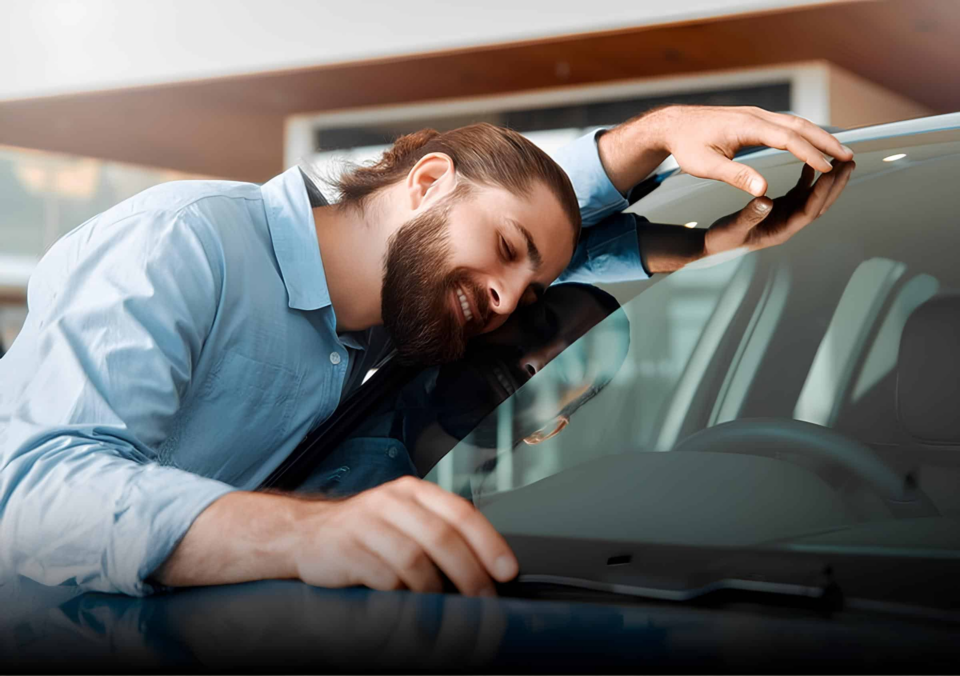
This Valentine’s Day, the most enduring romance in your life might be with four wheels and an engine
Individuals who had the strongest affection for their cars were those who had genuinely anthropomorphised them
Each February, we honour romanticlove with flowers, chocolates, and dinners by candlelight. We raise a glass to soulmates and first kisses, to the connections that shape our existence. Yet, another love story is quietly developing in driveways and garages around the globe. One that is equally passionate, equally enduring, and possibly equally irrational.
It’s the romance between individuals and their vehicles.
More than seventy per cent of us truly, profoundly develop an affection for our cars. We call them. We converse with them. We excuse their unpredictable traits just as we would a sulky companion. Someone softly encourages their Honda on chilly mornings. Another marks the anniversary of their Volvo together with their children’s birthdays.
Before rejecting this as mere sentiment, take a moment to consider the evidence. University of Chicago behavioural scientist Nicholas Epley found that when we give names to our cars and assign them personalities, we are employing the same emotional framework we utilise in human relationships. A survey of almost nine hundred listeners of NPR’s “Car Talk” revealed that the individuals who had the strongest affection for their cars were those who had genuinely anthropomorphised them, attributing thoughts, beliefs, and unique personalities to their vehicles.
The Anatomy of Automotive Romance
Like any great love story, the relationship between an individual and their vehicle develops across emotional layers, each satisfying profound human desires.
There’s achievement. That instant when you finally purchase your dream vehicle after years of saving is evidence that you’ve succeeded, that you are significant. Next is identity and self-expression, with your car revealing who you are even before you speak.
Most importantly, there’s freedom, that feeling from your initial experience behind the wheel that never fades away, the recollection of being unbound and set free. And ultimately, memory, the sound of your engine, the worn steering wheel, that fragrance that reminds of home.
The Car as Matchmaker
Automobiles generate a strong romantic attraction. Image courtesy: Koolshooters, Pexels
Sixty-five percent of long-term relationships began with a car date. Not a candlelight dinner. Not a movie. A car outing, two individuals, limited space, the sound of an engine, and the endless highway.
Psychologist Christopher Barnes has researched why automobiles generate such a strong romantic attraction. The confined space forces proximity, breaking down barriers. The sensory experience constructs a collective reality found nowhere else. Moreover, the vehicle provides something that is becoming increasingly uncommon, a true, seamless connection.
Fifty-seven percent of Americans experienced a notable “first” in a vehicle: first kiss, first “I love you,” first heartbreak. Seventy-eight percent have engaged in serious relationship conversations while driving—choosing to cohabit, become engaged, or completely end the relationship.
There’s an aspect of driving that simplifies expressing difficult matters, disclosing vulnerabilities, and taking emotional risks. You aren’t required to establish eye contact. You can gaze at the path in front of you while revealing your innermost feelings.
Study participants recall their first vehicles as freedom incarnate. Cruising through the streets with friends, exchanging secrets and aspirations, the car serving as a moving sanctuary where anything seemed achievable.
The romance flows in both directions. Studies indicate that men purchase eye-catching sports cars in hopes of drawing in potential partners, and at first, this proves effective. However, when women assess the potential for long-term relationships, the sports car turns into a detriment, indicating a fear of commitment instead of stability.
Different Languages of Love
Not everyone has the same affection for their cars. Seventy-three percent of women say they have emotional bonds with their cars, though the type of affection varies. Men frequently become carried away with specifications, horsepower, performance figures, and sheer power. The car symbolises the ultimate object of affection
Women often focus on the car’s feel, the sensory experience, and how the space affects their emotions. In feminist automotive studies, women characterise their cars as personal sanctuaries, intimate spaces where they can relax and express their true selves.
The Thrill of Passion
For fans of car restoration, the passion runs the deepest. Image courtesy: Mat Reding, Pexels
The acceleration, the surge of power, the perfect shift, these trigger dopamine and adrenaline, generating neurochemical reactions that compete with any romantic thrill. A study by Ford revealed that operators of high-performance cars felt genuine happiness, a level of joy comparable to falling in love.
Customisation increases the intimacy. Research indicates that individuals who personalise their vehicles feel a deeper emotional connection. Each becomes something more, fresh wheels, personalised paint, the ideal sound system.
For fans of restoration, the passion runs the deepest. When an engine sputters back to life after months of quiet, when the hands are dirty from hours of effort, it’s worth the hours put in.
The Heartbreak of Letting Go
In India, the emotional weight of parting with vehicles carries particular intensity.
Thirteen percent of car owners in the UK prefer to fix an old vehicle instead of replacing it, even if the repairs are more expensive than purchasing a new one. More than the cost, it’s about devotion, about recollections held in faded dashboards, creaking doors and threadbare seats.
On Reddit threads, owners share their challenges. Inherited cars turn into treasured family heirlooms that are hard to let go of. Cars sit idle in garages, unfeasible and costly, maintained out of emotional attachment.
“If I sell, will I regret it?” they ask. “Am I erasing memories by letting go?” These are queries identical to those posed at the conclusion of any significant relationship.
In India, the emotional weight of parting with vehicles carries particular intensity. When the Maruti 800, the car that launched millions of middle-class dreams, ceased production in 2014, the response was mourning. Fathers who sold their first 800s reported genuine sadness because the car was a vessel containing memories of friends and family vacations, first drives of children, and the promise of independence.
Even as newer cars arrive, families often retain elderly Ambassadors and Maruti 800s, maintaining them out of pure devotion to the memories they represent.
Enduring Bonds
The car’s significance in human romance remains strong. Image courtesy: Cottonbro Studio
Even with all the changes today, electric cars, ridesharing platforms, self-driving technology, the core attraction remains. Younger generations view ownership in a different light, yet for those who do possess, the emotional connection is still significant.
The car’s significance in human romance remains strong. Even with dating apps and evolving dating behaviours, that intimate, focused environment is unparalleled for authentic connection. Nearly half of car purchasers today opt for used cars not only for their cost-effectiveness but also for their “unique histories” or understanding that older vehicles carry stories eager to be continued.
This Valentine’s season, amidst the chocolates and flowers dominating the cultural dialogue, think about the subtle romance unfolding in driveways globally. The affectionate pat on the dashboard. The thorough cleaning on Saturday afternoon. The refusal to upgrade when logic indicates otherwise.
Individuals continue to whisper support to moody engines. Families continue to celebrate their vehicles’ achievements alongside their personal milestones.
One may think they are being irrational. Instead, they are being deeply human, showing that love doesn’t need a pulse, just a heart ready to offer it. The greatest romance isn’t always the one that is the most logical. It’s the one that makes you feel most alive, most free, most yourself.
And at times, that romance features four wheels, a motor, and a clear highway stretching out.


 DMCFinder Concierge
The ultimate Valentine’s Day 2026 twist: Why your car might be your true love
The ultimate Valentine’s Day 2026 twist: Why your car might be your true love
This Valentine’s Day, the most enduring romance in your life might be with four wheels and an engine
Each February, we honour romantic love with flowers, chocolates, and dinners by candlelight. We raise a glass to soulmates and first kisses, to the connections that shape our existence. Yet, another love story is quietly developing in driveways and garages around the globe. One that is equally passionate, equally enduring, and possibly equally irrational.
It’s the romance between individuals and their vehicles.
More than seventy per cent of us truly, profoundly develop an affection for our cars. We call them. We converse with them. We excuse their unpredictable traits just as we would a sulky companion. Someone softly encourages their Honda on chilly mornings. Another marks the anniversary of their Volvo together with their children’s birthdays.
Before rejecting this as mere sentiment, take a moment to consider the evidence. University of Chicago behavioural scientist Nicholas Epley found that when we give names to our cars and assign them personalities, we are employing the same emotional framework we utilise in human relationships. A survey of almost nine hundred listeners of NPR’s “Car Talk” revealed that the individuals who had the strongest affection for their cars were those who had genuinely anthropomorphised them, attributing thoughts, beliefs, and unique personalities to their vehicles.
The Anatomy of Automotive Romance
Like any great love story, the relationship between an individual and their vehicle develops across emotional layers, each satisfying profound human desires.
There’s achievement. That instant when you finally purchase your dream vehicle after years of saving is evidence that you’ve succeeded, that you are significant. Next is identity and self-expression, with your car revealing who you are even before you speak.
Most importantly, there’s freedom, that feeling from your initial experience behind the wheel that never fades away, the recollection of being unbound and set free. And ultimately, memory, the sound of your engine, the worn steering wheel, that fragrance that reminds of home.
The Car as Matchmaker
Sixty-five percent of long-term relationships began with a car date. Not a candlelight dinner. Not a movie. A car outing, two individuals, limited space, the sound of an engine, and the endless highway.
Psychologist Christopher Barnes has researched why automobiles generate such a strong romantic attraction. The confined space forces proximity, breaking down barriers. The sensory experience constructs a collective reality found nowhere else. Moreover, the vehicle provides something that is becoming increasingly uncommon, a true, seamless connection.
Fifty-seven percent of Americans experienced a notable “first” in a vehicle: first kiss, first “I love you,” first heartbreak. Seventy-eight percent have engaged in serious relationship conversations while driving—choosing to cohabit, become engaged, or completely end the relationship.
There’s an aspect of driving that simplifies expressing difficult matters, disclosing vulnerabilities, and taking emotional risks. You aren’t required to establish eye contact. You can gaze at the path in front of you while revealing your innermost feelings.
Study participants recall their first vehicles as freedom incarnate. Cruising through the streets with friends, exchanging secrets and aspirations, the car serving as a moving sanctuary where anything seemed achievable.
The romance flows in both directions. Studies indicate that men purchase eye-catching sports cars in hopes of drawing in potential partners, and at first, this proves effective. However, when women assess the potential for long-term relationships, the sports car turns into a detriment, indicating a fear of commitment instead of stability.
Different Languages of Love
Not everyone has the same affection for their cars. Seventy-three percent of women say they have emotional bonds with their cars, though the type of affection varies. Men frequently become carried away with specifications, horsepower, performance figures, and sheer power. The car symbolises the ultimate object of affection
Women often focus on the car’s feel, the sensory experience, and how the space affects their emotions. In feminist automotive studies, women characterise their cars as personal sanctuaries, intimate spaces where they can relax and express their true selves.
The Thrill of Passion
The acceleration, the surge of power, the perfect shift, these trigger dopamine and adrenaline, generating neurochemical reactions that compete with any romantic thrill. A study by Ford revealed that operators of high-performance cars felt genuine happiness, a level of joy comparable to falling in love.
Customisation increases the intimacy. Research indicates that individuals who personalise their vehicles feel a deeper emotional connection. Each becomes something more, fresh wheels, personalised paint, the ideal sound system.
For fans of restoration, the passion runs the deepest. When an engine sputters back to life after months of quiet, when the hands are dirty from hours of effort, it’s worth the hours put in.
The Heartbreak of Letting Go
Thirteen percent of car owners in the UK prefer to fix an old vehicle instead of replacing it, even if the repairs are more expensive than purchasing a new one. More than the cost, it’s about devotion, about recollections held in faded dashboards, creaking doors and threadbare seats.
On Reddit threads, owners share their challenges. Inherited cars turn into treasured family heirlooms that are hard to let go of. Cars sit idle in garages, unfeasible and costly, maintained out of emotional attachment.
“If I sell, will I regret it?” they ask. “Am I erasing memories by letting go?” These are queries identical to those posed at the conclusion of any significant relationship.
In India, the emotional weight of parting with vehicles carries particular intensity. When the Maruti 800, the car that launched millions of middle-class dreams, ceased production in 2014, the response was mourning. Fathers who sold their first 800s reported genuine sadness because the car was a vessel containing memories of friends and family vacations, first drives of children, and the promise of independence.
Even as newer cars arrive, families often retain elderly Ambassadors and Maruti 800s, maintaining them out of pure devotion to the memories they represent.
Enduring Bonds
Even with all the changes today, electric cars, ridesharing platforms, self-driving technology, the core attraction remains. Younger generations view ownership in a different light, yet for those who do possess, the emotional connection is still significant.
The car’s significance in human romance remains strong. Even with dating apps and evolving dating behaviours, that intimate, focused environment is unparalleled for authentic connection. Nearly half of car purchasers today opt for used cars not only for their cost-effectiveness but also for their “unique histories” or understanding that older vehicles carry stories eager to be continued.
This Valentine’s season, amidst the chocolates and flowers dominating the cultural dialogue, think about the subtle romance unfolding in driveways globally. The affectionate pat on the dashboard. The thorough cleaning on Saturday afternoon. The refusal to upgrade when logic indicates otherwise.
Individuals continue to whisper support to moody engines. Families continue to celebrate their vehicles’ achievements alongside their personal milestones.
One may think they are being irrational. Instead, they are being deeply human, showing that love doesn’t need a pulse, just a heart ready to offer it. The greatest romance isn’t always the one that is the most logical. It’s the one that makes you feel most alive, most free, most yourself.
And at times, that romance features four wheels, a motor, and a clear highway stretching out.
Read more – Latest
source
If you have any questions, queries or would like to advertise with DMCFinder please email us on info@dmcfinder.co.uk
Comments
More posts